Roofers for Downtown Buford's Historic District
Buford's growth runs up GA-20 and Peachtree Industrial Boulevard, but it lands hardest in the blocks around Main Street. Townhomes are filling spare lots, families keep arriving for Buford City Schools, and the early-1900s bungalows that give downtown Buford its character are carrying roofs that predate all of it. Best Buford Roofer is a local roofing company, operated by North Atlanta Roofing, and we do our own work. We handle downtown Buford repairs, replacements, and honest inspections ourselves. You get a roofer who has opened up old framing before, on the streets you actually live on.
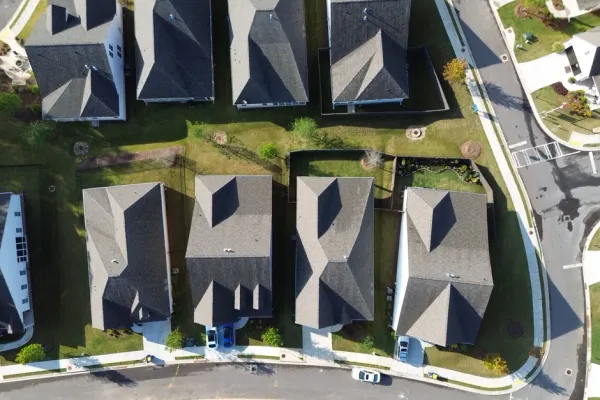
A local roofer that knows the blocks around Main Street
The Main Street district's housing is unlike anywhere else in Gwinnett County. Brick commercial buildings from Buford's tannery era anchor the old downtown. Around them you find cottages and bungalows from the early 1900s, midcentury ranches, and brand-new townhome rows, sometimes all three on a single street.
That mix is exactly why downtown Buford roofs need careful judgment. We install GAF and CertainTeed shingle systems, back every job with a written workmanship warranty, and price the work honestly. Our crews have worked on century-old decking and know what usually hides under a third layer of shingles.
Judgment for houses built before modern codes
An early-1900s cottage near Main Street may have plank decking, mixed framing, and several shingle layers from past reroofs. We walk the attic, probe the decking, and price the tear-off honestly instead of quoting blind from the curb.
One accountable roofer, not contractor roulette
You could call ten roofers off a search page and hope. With us, one local crew does the work, and the free inspection, itemized written quote, and workmanship warranty all come directly from the people on your roof.
Steep bungalow pitches reward careful tear-off work
Plenty of downtown Buford bungalows still carry the steep, simple gables they were framed with a hundred years ago. Roofs like these are honest structures, but the decking beneath them is often spaced plank rather than plywood, and past owners sometimes layered new shingles over old rather than tearing off. A proper reroof here starts by removing every layer, checking each board, and replacing anything soft before underlayment goes down. We then run synthetic underlayment, new drip edge, and open metal valleys where the geometry calls for them. The finished roof keeps the original lines of the house while meeting current code. Shortcuts on an old bungalow always surface later, usually as a ceiling stain.

Old chimneys fail at the flashing before the brick
Masonry chimneys rise from most of downtown Buford's older rooflines, and the leaks blamed on them usually trace back to failed step flashing or counterflashing rather than the stack itself. Mortar joints from the early twentieth century also wick water once caps crack. We treat the chimney as part of the roof system: cutting in new step flashing, grinding and resealing counterflashing into the brick, and flagging crown problems while the ladders are already up. If the masonry itself needs work, that stays with the same crew instead of sending you hunting for a second trade. One visit, one accountable roofer, and a chimney that sheds water the way it was meant to.
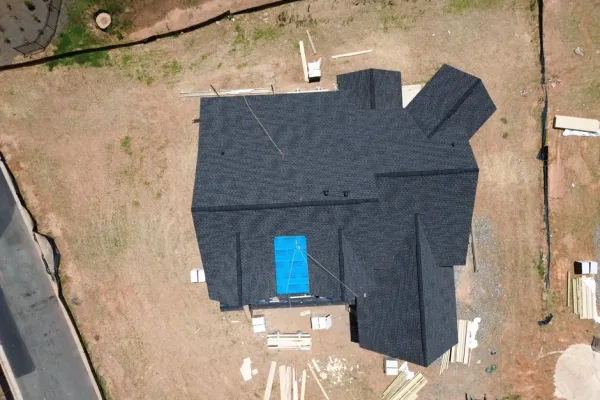
Townhome infill put new roof types on old streets
Walk two blocks off Main Street and you will pass townhome rows that did not exist a decade ago. Those roofs have little in common with their bungalow neighbors: shallower pitches, shared party-wall lines, continuous ridge vents, and laminated architectural shingles installed all at once during construction. When they age, they age together, and one neglected section can push water across a shared wall. We cover both ends of that spectrum in the same afternoon, a plank-decked cottage in the morning and a townhome warranty repair after lunch. For new-build owners in downtown Buford, a baseline inspection a few years in is the smart move, because builder-grade pipe boots and fastener patterns show their problems early.
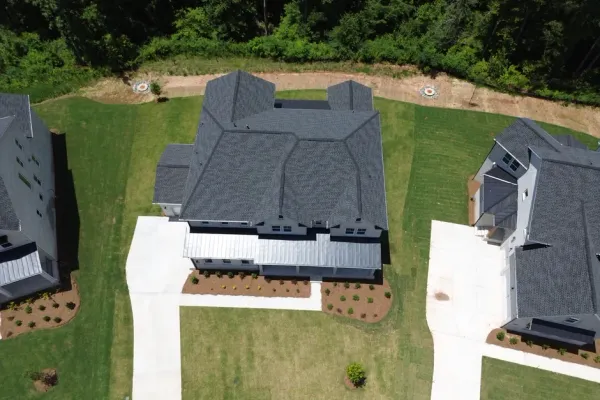
Hail does not skip the Main Street district
Gwinnett County sits squarely in north Georgia's hail belt, and the cells that hammer the I-985 corridor cross downtown Buford on their way through. Hail bruises shingles without always leaving visible holes; it knocks granules loose so the mat underneath cooks in summer sun. Wind uplift works on the district's older roofs too, especially where decades-old fasteners have lost their bite. After a storm, we document damage slope by slope, meet the insurance adjuster on site, and say plainly when a roof does not need replacing. That last part matters. Storm chasers sweep through Buford after every event, and a homeowner holding a documented, honest assessment is much harder to pressure.
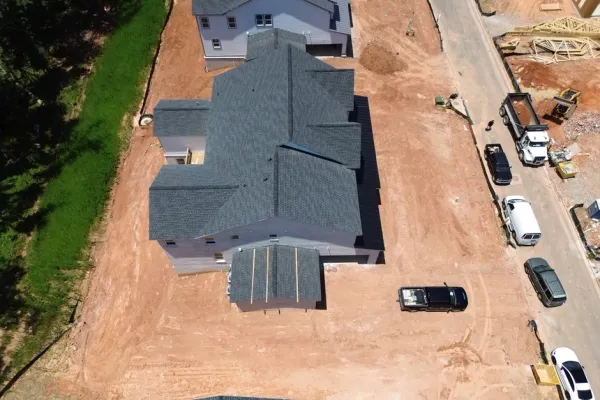
Gutters carry the load under downtown's oldest trees
Mature oaks and pines shade the district's yards, which feels wonderful in August and punishes roof drainage the rest of the year. Leaves and pine straw pack the gutters, water overtops the back edge, and the fascia and soffit boards behind them stay damp until they rot. On homes this age the trim is often original wood, so catching trouble early saves real carpentry money. We clean and repair existing runs, replace undersized systems with high-capacity gutters, and fit guards where the tree cover justifies them. Good drainage is cheap protection for a downtown Buford foundation, and it is the easiest part of the whole roof system to keep ahead of.
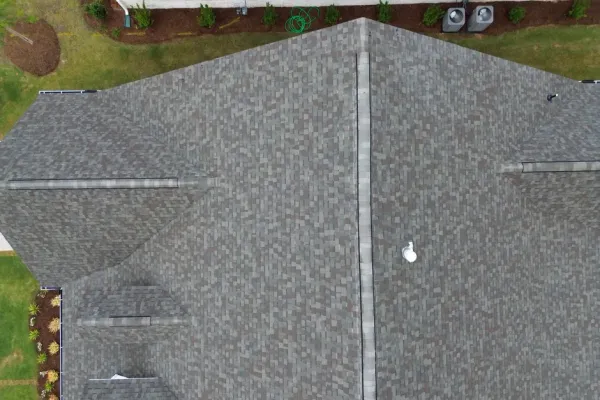
Downtown Buford is carrying two housing booms at once. The first happened a century ago, when the tannery was running and the blocks around Main Street filled with cottages and bungalows for the people who worked there. The second is happening now, as GA-20 and Peachtree Industrial Boulevard funnel metro growth north and townhome infill claims the district’s spare lots, with Buford City Schools pulling in new families every year. The result is a neighborhood where a roofing crew might handle hundred-year-old plank decking and factory-fresh laminated shingles in the same week, and where hiring the wrong crew for the old stuff gets expensive in a hurry.
Tannery-era Buford built houses that outlast their roofs
The brick commercial buildings from the Bona Allen years were built to work hard, and the houses that grew up around them share that stubbornness. Original framing in these homes is rough but dense. What wears out is everything layered on top: shingles at the end of their granule life, flashing that has been caulked instead of replaced through three reroofs, and attic ventilation that was never designed in at all.
Ventilation deserves the extra attention. Plenty of early-1900s houses in downtown Buford have soffit vents painted shut or ridge lines closed off for decades. Heat and moisture build in the attic, aging shingles from below and inviting mold onto the underside of the decking. When we run a roof inspection, attic airflow gets checked alongside the shingle surface, because repairing the roof without fixing the ventilation just schedules the next failure.
A 1920s cottage and a 2020s townhome are different reroofs on the same street
The cottage job starts with a little archaeology. Tear-off can reveal multiple old shingle layers, cedar shakes under asphalt, plank decking with gaps, and framing quirks nobody ever drew on a plan. Material choices lean traditional: a dimensional shingle profile that suits the era, open valleys, painted drip edge, and flashing details cut to the house rather than pulled from a standard kit.
The townhome job is a systems exercise. Everything is consistent and modern, so the work is about matching the builder’s spec where it was right and quietly upgrading it where it was thin. Party-wall lines decide where one owner’s roof ends, and coordinating with neighbors matters nearly as much as the nailing pattern.
Same street, same rain, very different projects. A local roofer earns its keep by having done both, and the crews handling roof repair around downtown Buford have the scar tissue to prove it.
The downtown Buford jobs we handle most
Leak chasing tops the list. Old roof geometry hides leak paths well, and roof leak repair on a downtown house usually means tracing stains along rafters back to a failed pipe boot, a rusted valley, or chimney flashing that gave up years ago. Full replacements come next, mostly on bungalows whose roofs simply timed out; on those, the itemized quote spells out decking, underlayment, ridge vent, and disposal so nothing hides inside an allowance. Chimney work rides along often enough here that chimney repair is part of the regular rotation. If you want a number before anyone visits, the roof cost calculator gives downtown Buford homeowners a realistic range in about a minute.
From Main Street out to the rest of Buford
We cover the whole city and the corridor around it. Up at the I-85 side of town, homeowners in the golf-course subdivisions get the same crew, and our Hamilton Mill page covers what replacement-age roofs look like out there. Down by the Mall of Georgia, the Ivy Creek area has its own patterns, mostly 2000s subdivisions hitting their first reroofs. Wherever you sit in Buford, the process starts the same way: reach out and let a local roofer put honest eyes on the roof over your head.
Can you match shingles on an older downtown Buford home?
Usually, yes. For spot repairs on a downtown Buford bungalow, we pull a sample, match the closest current color and profile, and blend new tabs into the field so the patch does not shout from the curb. Matching gets harder once a shingle line is discontinued or a roof has faded unevenly under tree cover. If a clean blend is not possible, we say so up front and lay out options, from repairing a low-visibility slope with the near-match to pricing a full replacement in a written, itemized quote.
Do the early-1900s houses near Main Street need new decking when reroofed?
Not automatically, but budget for some. Many downtown Buford homes from that era ride on plank decking that has given a century of service. Boards near old leaks, chimneys, and valleys are the usual casualties. We price decking replacement per board or per sheet in the estimate, inspect everything after tear-off, and photograph what turns up before covering it. You approve real quantities instead of paying a padded allowance, which is how reroofing an old house ought to work.
How fast can someone look at an active leak in downtown Buford?
Fast. We work Buford and North Gwinnett with 24/7 storm response. For active leaks we tarp first to stop the water, then schedule the permanent fix once things dry out. Call (470) 777-7344 and we will get out the same day. If a ceiling is already staining, do not wait. Water travels along rafters, and the wet spot is rarely under the actual hole.
We just bought a townhome in downtown Buford. What should the roof checklist include?
Start with a baseline inspection even on a young roof. Builder-grade pipe boots crack early, ridge vent end caps loosen, and nail pops show up within the first decade. Check your association documents for who owns which roof sections, since party-wall lines complicate repairs. Then keep gutters clear, especially on units sitting under the district's older trees. A short written report now gives you a reference point for every future storm claim, and our inspection is free.
Get a straight answer on a downtown Buford roof
Whether you own a bungalow from the tannery years or a townhome finished last spring, the first step is the same: a free inspection from a local roofer and a written quote with real numbers. No pressure and no storm-chaser theatrics. Call (470) 777-7344 or book online.
Not sure what a new roof runs? Estimate your roof cost in Buford, measured from satellite imagery, or run a storm & insurance damage check.