A Flowery Branch Roofing Company That Works Lake Lanier
I-985 carries two versions of Flowery Branch home every evening: commuters peeling off at exit 8 for the old depot side of town, and everyone else riding to exit 12 for the subdivisions spreading toward Lake Lanier. The town has been one of Hall County's fastest-growing addresses for two decades, and its rooftops tell the story, from in-town homes that predate the boom to shoreline streets finished within the last few years. Best Buford Roofer is a local roofing company, operated by North Atlanta Roofing, and we do our own work. We handle Flowery Branch inspections, repairs, and full replacements ourselves, just up the interstate from home base.
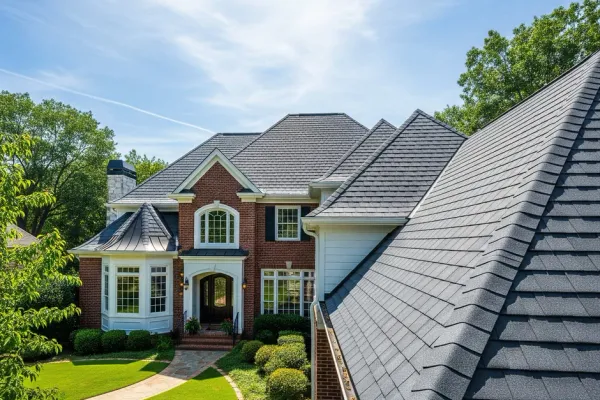
A Buford roofer that treats Hall County as home turf
Flowery Branch sits one county over from our Buford base, but the drive up I-985 is shorter than most Atlanta commutes, and we treat the town as regular territory. Growth this fast produces every roofing situation at once: aging framing near the railroad depot, first reroofs arriving in the 2000s subdivisions, and new-construction punch lists out by the lake.
We install GAF and CertainTeed shingle systems, provide free inspections and itemized written estimates, and back every installation with a written workmanship warranty. Flowery Branch homeowners get a local roofer who reads the house before picking the materials.
Range for a town with three housing eras
An older in-town home, a 2005 two-story, and a lakeside build finished last year call for three different sets of instincts. We carry all three, and match crew and method to the house instead of forcing one process onto everything.
Lake weather taken seriously
Open water changes wind. Shoreline subdivisions catch gusts inland streets never feel, so we account for it: wind-rated shingle lines, upgraded fastening schedules, and flashing details chosen for exposure rather than habit.
Shoreline wind and open-water sun age lake roofs early
Lake Lanier gives its shoreline subdivisions the views and takes payment out of the roofs. Wind crossing open water reaches the tree line with nothing to slow it, so gusts that merely rustle an inland street can lift tabs and stress ridge caps a block from the shore. Southern exposures over water also catch reflected light on top of direct sun, holding shingle surface temperatures higher for longer. The wear is measurable: sealant strips let go earlier, granule loss runs ahead of the calendar, and wind-driven rain finds every unsealed edge. On Flowery Branch lake streets we spec wind-rated laminated shingles, six-nail fastening, and generous ice and water shield at eaves and valleys, because the exposure is real even when the forecast looks ordinary.
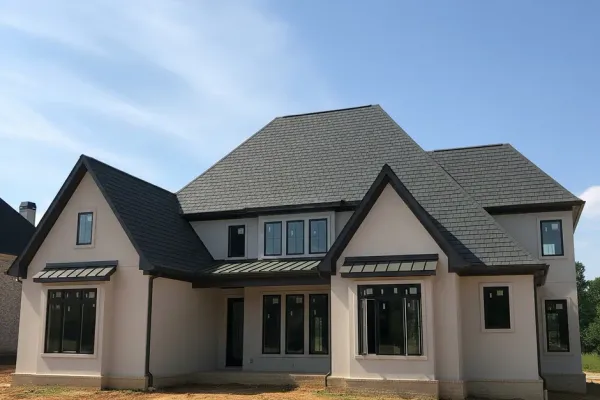
The depot district carries the town's oldest decking
Around the historic railroad depot, Flowery Branch keeps a core of older in-town homes that predate every subdivision in the Hall County boom. Roofs here are honest and simple, steep gables over plank decking, but their age changes the work. Tear-offs reveal spaced boards, repairs from several different decades, and masonry chimneys whose step flashing and counterflashing gave out a mortar generation ago. Leaks in these houses trace to flashing and chimney details far more often than to the shingle field itself. We price decking replacement per board in writing, treat the chimney as part of the roof system rather than someone else's trade, and keep the finished lines true to what the depot district's streetscape expects.
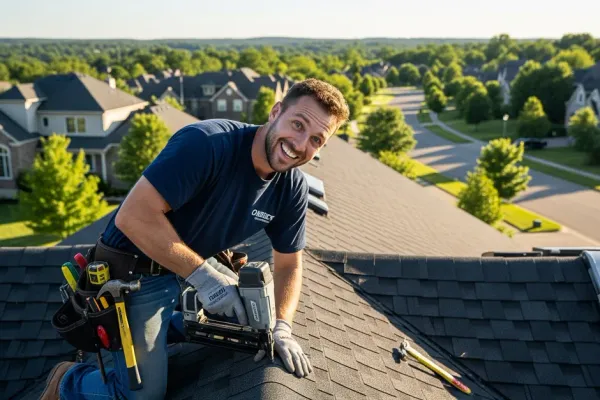
Subdivision growth since 2000 set the replacement calendar
Flowery Branch approved subdivisions steadily through the 2000s, 2010s, and 2020s, so reroof demand now arrives in waves keyed to those construction years. The earliest 2000s streets are entering full replacement season, their laminated architectural shingles showing curl, seal failure, and thinning granule cover right on schedule. Streets finished in the 2010s mostly need honest maintenance: pipe boot swaps, sealant refreshes, post-storm checks. The newest lakeside phases need builder-quality verification more than repair, since punch-list roofing defects tend to surface in years two through five. One local roofer covering all three stages keeps the advice consistent, and keeps a replacement-scale bid from landing on a Flowery Branch roof that needed a boot swap.
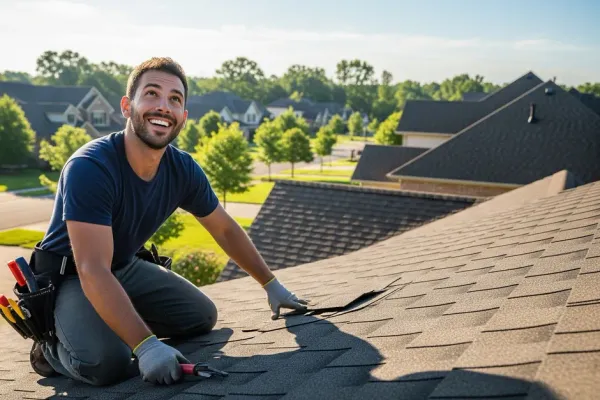
Exits 8 and 12 keep storm response measured in minutes
Hall County draws the same north Georgia storm menu as Gwinnett: hail cells, straight-line wind, and afternoon thunderstorms that build all summer. What Flowery Branch has going for it is access. I-985 runs the length of town, and exits 8 and 12 drop crews within minutes of the depot district and the lake streets alike. After a storm that means same-day tarping for active leaks, photo documentation of every slope, and an adjuster meeting backed by evidence instead of adjectives. Wind claims on lake-exposed streets get particular care, since uplift damage hides under tabs that look perfectly flat from a driveway.
Gutters and trim take the lake's weather test first
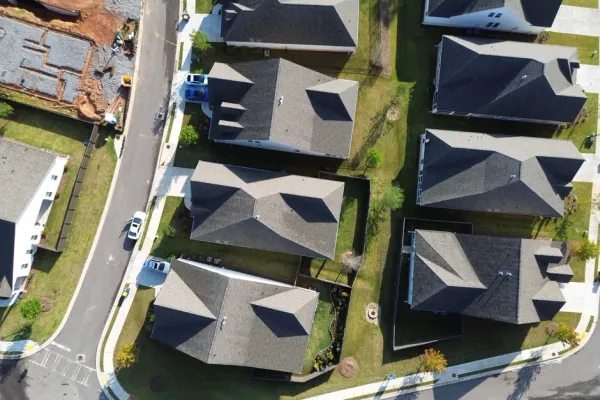
Water management decides how gracefully a Flowery Branch roof ages, and the town makes it interesting at both ends. In-town lots near the depot sit under mature hardwoods that load gutters with leaves every fall, while lakeside streets face wind-driven rain that tests every inch of drip edge, fascia, and soffit on the weather side. Overflowing runs rot trim quietly, and on newer homes the builder-grade gutters are often undersized for the roof area they serve. We treat drainage as part of every job: resetting pitch, upsizing runs where the math demands it, and flagging soft fascia while the ladders are already set. It is the least glamorous line on the quote and the one that protects all the others.
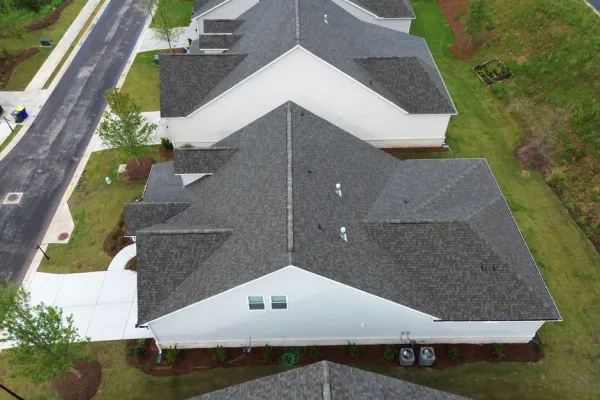
Flowery Branch turned its interstate into a main street. Exits 8 and 12 on I-985 bracket the town, and two decades of Hall County growth have poured through them, filling the land between the railroad and Lake Lanier with subdivisions faster than almost anywhere northeast of Atlanta. The old town center held on through all of it. The historic railroad depot still anchors a walkable downtown of older in-town homes, the Atlanta Falcons run their training facility on the edge of town, and shoreline streets keep pushing toward the water. For roofing purposes that history matters, because Flowery Branch is really three housing stocks wearing one name, and each fails in its own way on its own schedule.
Growth this fast leaves a roofing backlog behind it
Fast-growing towns accumulate deferred roof work almost invisibly. Builders finish, warranties lapse, owners change, and nobody lines up a trusted roofer until water shows up somewhere it should not. Flowery Branch is at that point now. The 2000s subdivisions that launched the boom are crossing the 20-year line where laminated shingles start giving up, and a first roof replacement is a genuinely different purchase from the repairs that came before it: tear-off scope, decking allowances, underlayment choice, ridge vent sizing, disposal, all either priced line by line or buried in a lump sum you cannot audit. We exist to make that first big purchase boring. One local roofer, an itemized quote, and a workmanship warranty that stays enforceable because the company answering the phone next year is the same one that did the work.
A depot-district reroof and a lakeside reroof are cousins, not twins
Both jobs strip a roof to its bones. What the bones look like is where they part ways. Near the depot, tear-off is archaeology: plank decking with a century of nail holes, flashing patched in three different eras, and masonry that needs chimney repair folded into the roofing scope while everything is open. Materials lean traditional, with dimensional profiles and painted drip edge keeping the old streetscape intact. Out by the lake the structure is modern and the enemy is exposure. Decking is plywood and predictable, but wind ratings, fastening schedules, and sealed edges carry real weight because open water gives storms a running start at the first row of homes. Same trade, opposite instincts. We read the house before picking the playbook, which is exactly how a Flowery Branch roof should be quoted.
The work Flowery Branch actually books, season by season
Spring opens with inspection season, once winter’s freeze-thaw cycles have finished prying at whatever was loose and pollen makes every surface tell on its drainage. Summer belongs to storm work. Afternoon thunderstorms and the occasional hail cell keep emergency roof repair in the rotation, tarping first and permanent fixes once the radar clears. Fall is replacement season, when homeowners who got a spring assessment schedule the tear-off in dry, cooler weather; the prepared ones have already run the calculator that prices a Flowery Branch roof so the bids landed on a briefed mind. Winter is for the small stuff, pipe boots and flashing and gutter resets, plus the urgent call when wind finds a weak edge on a lake street. We work Flowery Branch through all four seasons, which is what keeps response times short when the weather turns violent.
Buford next door, one roofer across the county line
The Buford in our name is a base, not a boundary. Flowery Branch gets the same crew that handles the rest of our coverage down the corridor, including the 2000s subdivisions around the Mall of Georgia described on our Ivy Creek page, a straight shot down the interstate from exit 8. Hall County address or Gwinnett, the process never changes: get in touch, describe the roof, and get a free inspection, an itemized quote, and a written workmanship warranty. The choice, afterward, is entirely yours.
Is Flowery Branch really inside your service area?
Yes, and not at the edge of it. We work out of Buford and cover Hall County's lower end as regular territory, with I-985 putting most of Flowery Branch within a short drive. Our crews pass through the corridor constantly, so a Flowery Branch inspection books on the same calendar as one across the county line, not on a someday list. Coverage runs from the depot district to the shoreline subdivisions, and the free inspection, written quote, and workmanship warranty are identical everywhere.
What should Lake Lanier shoreline homeowners watch for?
Wind damage that does not look like wind damage. Uplift on lake-exposed slopes breaks the sealant bond under tabs while everything appears flat from the ground, and the next storm peels what was already loose. Watch for lifted shingle edges after gusty days, granule drifts below downspouts, and ridge vents that have started to rattle. Reflected sun off the water also ages south-facing slopes faster than their street-side twins. An annual inspection catches both patterns early, and shoreline owners in Flowery Branch should treat the after-storm check as routine rather than optional.
Who handles the older homes near the depot?
We do, with a different toolkit. Older in-town Flowery Branch homes need a roofer comfortable with plank decking, steep simple gables, and chimney flashing that may be the original metal. We price decking by the board, photograph what tear-off reveals, and repair chimney flashing and masonry details in the same visit instead of splitting the job across trades. If a house near the depot has been reroofed several times over the decades, expect the estimate to address layer removal honestly. That history is normal here, and quoting around it is how leaks come back.
How do insurance claims work after a Hall County hailstorm?
Documentation first, paperwork second. After hail moves through Flowery Branch, we inspect every slope, photograph genuine impact damage, and write an assessment that either meets an insurer's threshold or says plainly that it does not. If a claim makes sense, we meet your adjuster on the roof, walk the evidence, and handle the scope discussion with the insurer directly. If it does not, you get that in writing too, which is worth plenty when storm-chasing crews sweep the exits after every event. Either way the decision stays documented, and it stays yours.
One call covers Flowery Branch, depot to dock
Old house near the tracks or new build near the water, the starting point is identical: a free inspection from a local roofer, photos of what we find, and an itemized written quote with a workmanship warranty behind it. Call (470) 777-7344, or price the project first and book whenever you are ready.
Not sure what a new roof runs? Estimate your roof cost in Buford, measured from satellite imagery, or run a storm & insurance damage check.